

Shape. Yield. Character.
Guide to the Hide
Here we help explain average hide shapes, sizes, and average usable area to better understanding leather yield, planning your order, and providing our team with the details needed to select the right hides for your project.
As a general industry formula, one linear yard of 54-inch-wide fabric equals approximately 18 square feet of leather, based on hides averaging 50 to 55 square feet.
Leather is a natural product, and no two hides are exactly alike, and that is exactly what makes it so beautiful. Each hide carries its own shape, size, grain, markings, wrinkles, scars, and subtle variations in color and texture.
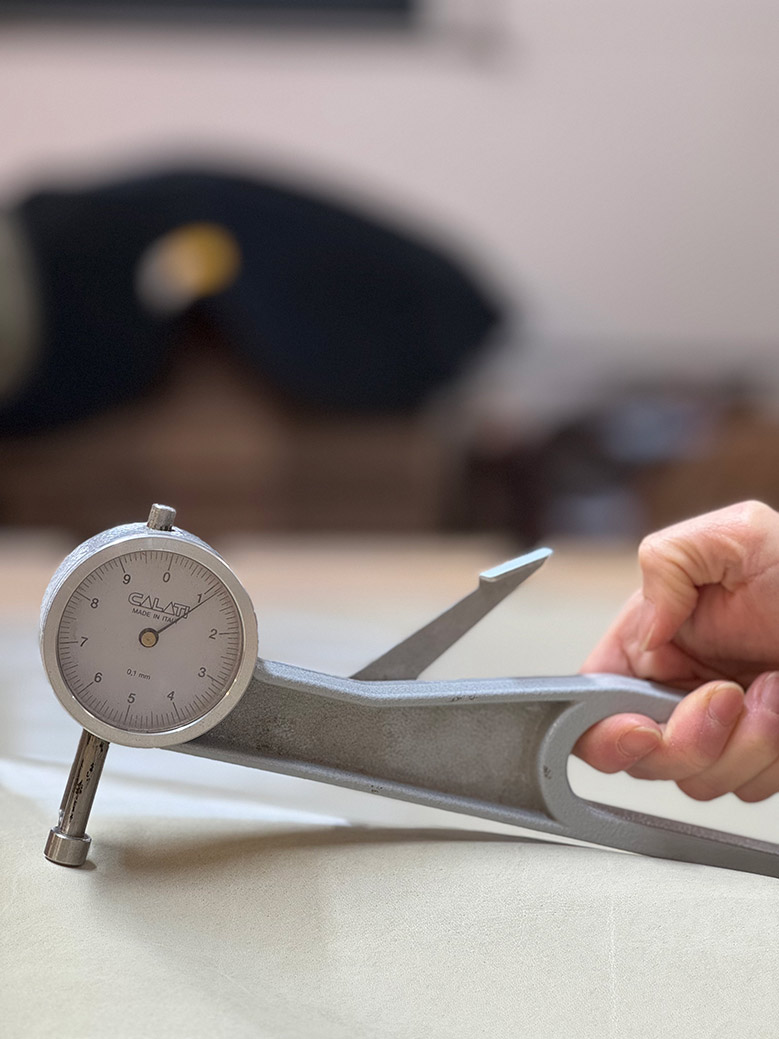
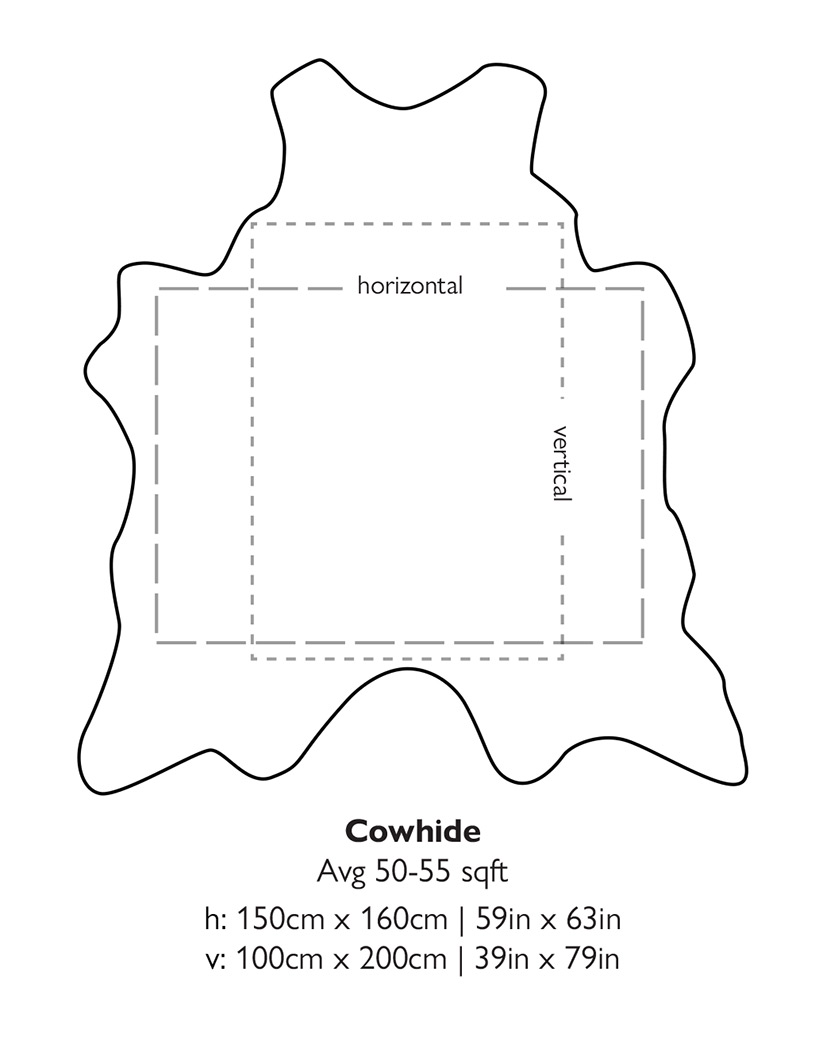
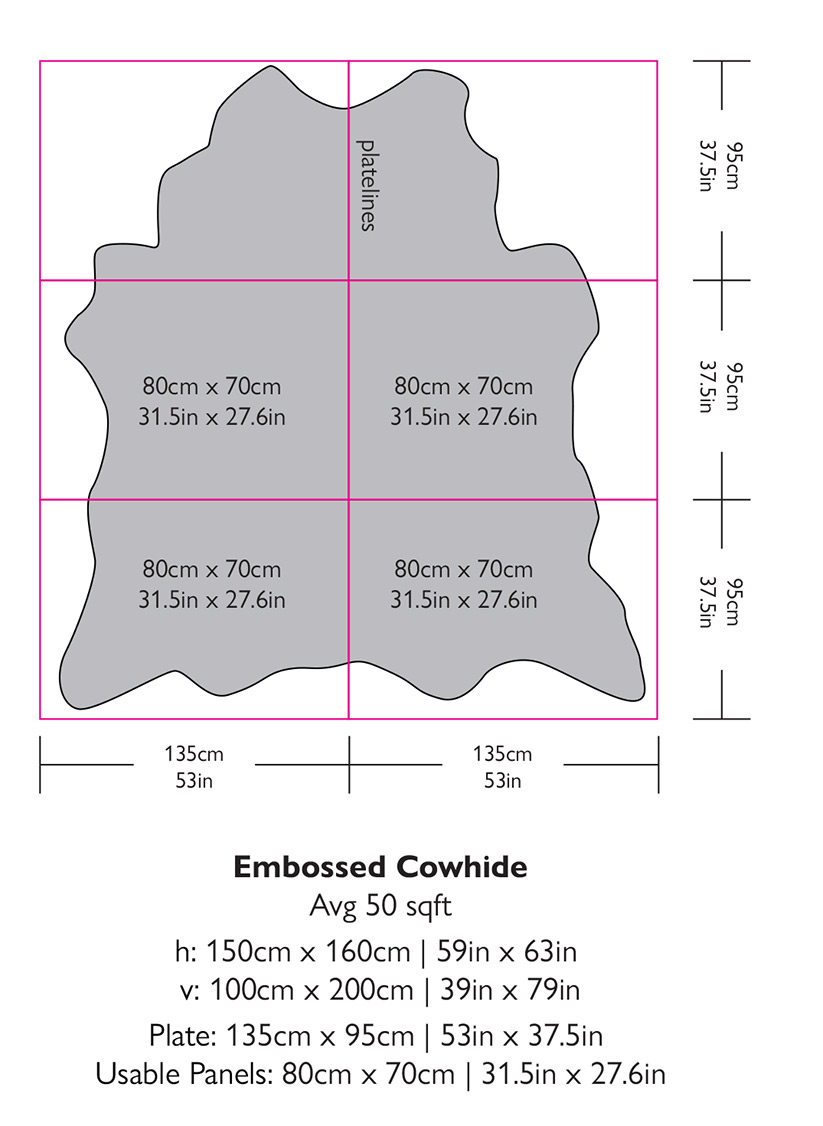
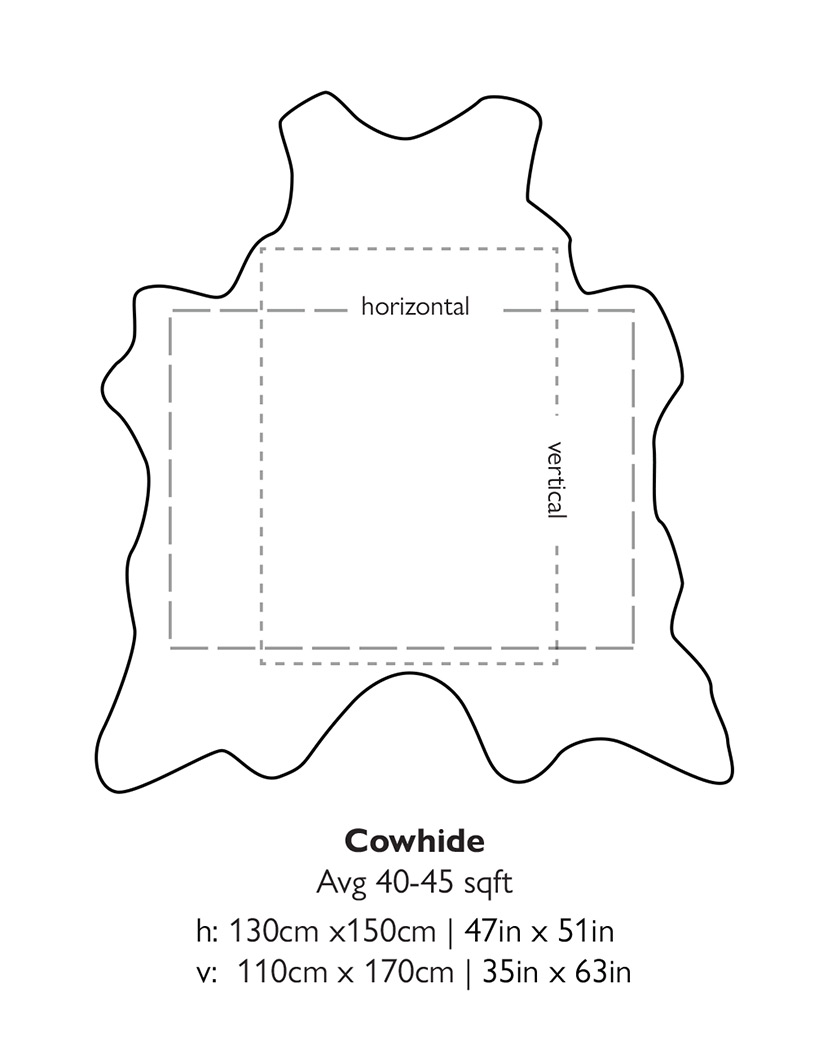
Our Guide to the Hide is designed to help designers, workrooms, upholsterers, and clients better understand the natural nuances of leather, especially when planning yardage, estimating usable area, and placing an order.
This guide provides average hide shapes and sizes, along with estimated usable area, to help support more accurate planning.
Natural markings should always be expected within each hide. Belly wrinkles, neck wrinkles, healed scars, grain variation, and other organic characteristics are part of the story of the material. Every category of leather, whether full aniline, semi-aniline, or protected, will show some level of natural marking. These markings are often more visible in aniline leathers because they are made without heavy pigments or corrective finishes, allowing the true surface of the hide to remain visible. This is not a flaw. It is a sign of quality, authenticity, and leather in its most honest and beautiful form.
When placing a leather order, it is always helpful to provide as much information as possible upfront, including panel sizes, piece dimensions, upholstery details, or any specific areas where seams may or may not be acceptable. The more we know about the project, the better our team can review the requirements, select the appropriate hides, and help ensure the best result for you and your client.